


Ammonium Bicarbonate Guide and Boron Fertilizer Price Trends
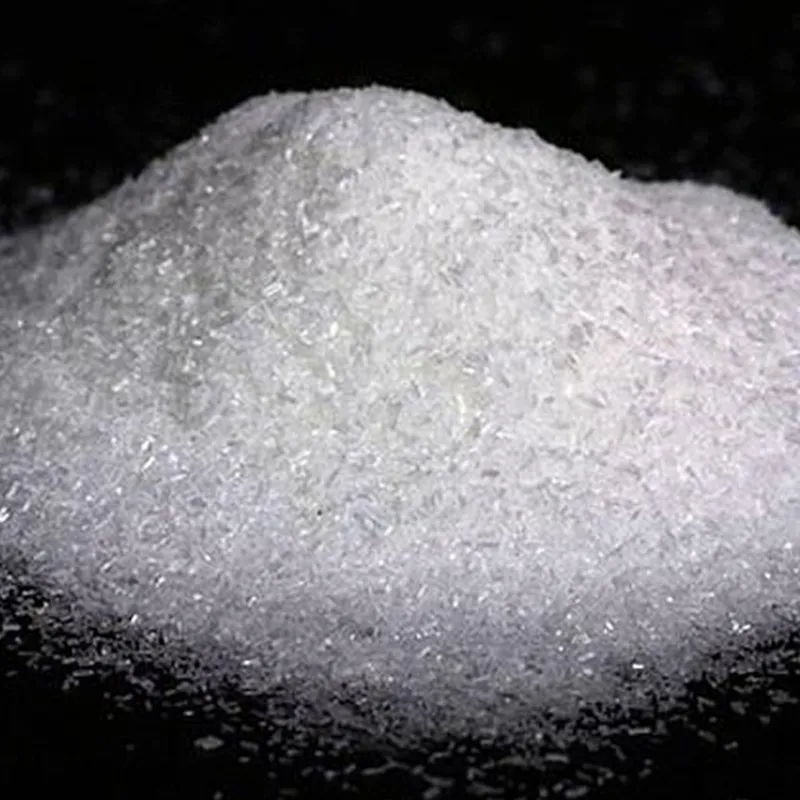
Securing high-purity chemical inputs is a critical operational challenge for agricultural and food production enterprises. Ammonium bicarbonate, a white crystalline powder, serves as a dual-purpose agent, acting both as a high-efficiency nitrogen source for crops and a fast-acting leavening agent in industrial baking. For procurement managers, the value of this compound lies in its ability to provide rapid ammonia release in soil and consistent aeration in baked goods, ensuring that both crop yields and food textures meet stringent commercial standards.
Whether utilized as a pH buffer in pharmaceutical formulations or as a critical additive in rubber manufacturing, the quality of the powder—specifically its purity and granularity—directly impacts the final product's stability. Navigating the complexities of the global chemical supply chain requires partnering with distributors who can guarantee stability in both product quality and logistics, reducing the risks associated with purity fluctuations and delivery delays in large-scale industrial operations.

Chemical Properties and the Versatility of Ammonium Bicarbonate in Modern Industry
Ammonium bicarbonate is recognized for its unique chemical composition, primarily acting as a salt that decomposes upon heating to release carbon dioxide, ammonia, and water. This characteristic makes it an indispensable tool in the food industry, where it is used to create the light, crispy textures typical of crackers, biscuits, and cookies. Unlike other leavening agents, its fast-acting nature ensures uniform aeration in high-volume production lines, which is essential for maintaining consistent product quality across thousands of units.
Beyond the kitchen, its utility extends into heavy industry and pharmaceutical science. In metal cleaning and fire extinguishing processes, its chemical stability and reactivity are leveraged for specific industrial outcomes. In pharmaceutical settings, it functions as a stabilizing agent and pH buffer, ensuring that drug formulations remain effective and safe. The ability to supply different grades—ranging from standard agricultural to high-purity food and pharmaceutical grades—allows a single chemical entity to support a diverse array of global supply chains.

Agricultural Integration and Soil Fertility Enhancement Logic
In the context of crop production, ammonium bicarbonate serves as a vital nitrogen fertilizer. The mechanism of action involves the quick release of ammonia and carbon dioxide, which provides plants with an immediate source of nitrogen. This rapid availability is particularly beneficial during critical growth stages where nitrogen deficiency can lead to stunted development and reduced yields. By improving soil fertility through efficient nitrogen delivery, it supports the healthy growth of various crop types in diverse climatic conditions.
The application of this fertilizer requires a technical understanding of soil chemistry to avoid ammonia volatilization. When integrated into a balanced nutrient program, it complements other micronutrients, including those who might be researching boron fertilizer price to optimize overall plant health. The synergy between nitrogen and trace elements ensures that the plant's metabolic processes are fully supported, leading to stronger stems, healthier foliage, and increased fruit or grain production for commercial farms.
Technical Procurement Considerations for Industrial Buyers
When sourcing ammonium bicarbonate, technical buyers must look beyond basic purity. Granularity, typically measured in mesh (such as 80-120 mesh), is a decisive factor for application success. In the food industry, a consistent mesh size prevents "spotting" in baked goods and ensures an even rise. In agriculture, the particle size affects the dissolution rate and the speed of nitrogen release into the soil, which can influence the timing of fertilization schedules.
Furthermore, the risk of contamination is a primary concern for food-grade and pharmaceutical-grade procurement. Rigorous quality control measures are necessary to ensure that the product is free from heavy metals and other impurities that could compromise consumer safety or drug efficacy. Buyers should evaluate suppliers based on their ability to provide comprehensive technical data sheets and their adherence to international purity standards, ensuring that the delivered material is consistent from the first bag to the last.
Technical Specifications and Application Suitability Matrix
| Specification Parameter | Food Grade | Agricultural Grade | Industrial Grade | Impact on Application |
|---|---|---|---|---|
| Purity Level | 99% - 100.5% | Standard | Standard | Determines reaction speed |
| Nitrogen (N) Content | N/A | Approx. 17.1% | Variable | Controls nutrient density |
| Appearance | White Crystal | White Crystal | White Powder | Affects visual quality |
| Granularity | 80-120 Mesh | Coarse/Fine | Variable | Influences dissolution rate |
| Packaging | 25kg / Bag | 25kg / Bag | Bulk/Bags | Determines storage logistics |
Supply Chain Reliability and Global Distribution Expertise
The global distribution of chemical products is fraught with logistical challenges, from maintaining moisture-free storage to ensuring timely delivery to avoid production downtime. A professional export framework is essential for mitigating these risks. By utilizing specialized distribution centers and professional logistics teams, companies can ensure that crystalline powders like ammonium bicarbonate are handled with care, preventing caking or degradation during transit across international borders.
Reliability in the supply chain is not just about transport, but about the strength of the relationship between the distributor and the manufacturer. Establishing long-term partnerships with large-scale domestic producers allows for a stable supply of raw materials even during market volatility. This integrated approach—combining manufacturing resources with export expertise—enables the provision of one-stop chemical solutions, allowing buyers in over 60 countries to access high-quality products without the complexities of managing multiple small-scale vendors.
Future Trends in Chemical Fertilization and Food Additives
The industry is moving toward more precision-based applications. In agriculture, the trend is shifting toward "smart fertilization," where nitrogen sources like ammonium bicarbonate are combined with slow-release coatings or specific micronutrients to minimize environmental runoff. This evolution requires a deeper understanding of the interaction between the fertilizer and the soil microbiome, pushing the demand for higher purity and more specific chemical formulations to maximize nutrient uptake efficiency.
In the food sector, the demand for "clean label" ingredients is driving the need for ultra-pure leavening agents that leave no residual aftertaste. The future of ammonium bicarbonate lies in its refinement to meet these evolving consumer preferences and regulatory requirements. As production techniques advance, the ability to customize the chemical properties of the powder to meet specific industrial needs—such as tailored dissolution rates or specific pH buffering capacities—will become a key competitive advantage for chemical suppliers.
Frequently Asked Questions About Ammonium Bicarbonate
What is the primary difference between food grade and agricultural grade ammonium bicarbonate?
The primary difference lies in the purity level and the strictness of quality control. Food grade ammonium bicarbonate must meet high purity standards (99% - 100.5%) and be free from contaminants to ensure safety in human consumption, whereas agricultural grade focuses on nitrogen content (around 17.1%) for crop nutrition.
How does ammonium bicarbonate function as a leavening agent in baking?
When heated, the compound decomposes and releases carbon dioxide gas. This gas creates bubbles within the dough, resulting in a light, airy, and crispy texture, which is why it is highly preferred for the production of crackers and biscuits.
Is this product suitable for use as a nitrogen fertilizer for all crop types?
Yes, it is a versatile nitrogen source; however, its rapid release of ammonia means it is most effective when used according to specific soil needs and application timings to prevent nitrogen loss to the atmosphere.
What precautions should be taken during the storage of ammonium bicarbonate?
It should be stored in a cool, dry, and well-ventilated area. Because it is a crystalline powder, it must be kept away from moisture to prevent caking and decomposition, which could reduce its effectiveness as a leavening agent or fertilizer.
Can ammonium bicarbonate be used in pharmaceutical applications?
Yes, in the pharmaceutical industry, it is utilized as a pH buffer and stabilizing agent in various drug formulations, provided that the pharmaceutical-grade purity standards are met.
How does the mesh size affect the industrial use of this chemical?
The mesh size (e.g., 80-120 mesh) determines the particle fineness. Finer particles dissolve more quickly and distribute more evenly, which is critical for uniform aeration in food production and rapid nutrient absorption in agriculture.
Industry Technical References
- Food and Agriculture Organization of the United Nations (FAO)
- World Health Organization (WHO) Food Safety Standards
- PubChem Compound Summary for Ammonium Bicarbonate
- Research on Nitrogen Fertilizer Efficiency and Soil Chemistry
For enterprises seeking a stable supply of high-purity ammonium bicarbonate, selecting a partner with integrated logistics and manufacturing ties is the most effective way to ensure operational continuity and product excellence.
Related Industrial Insights