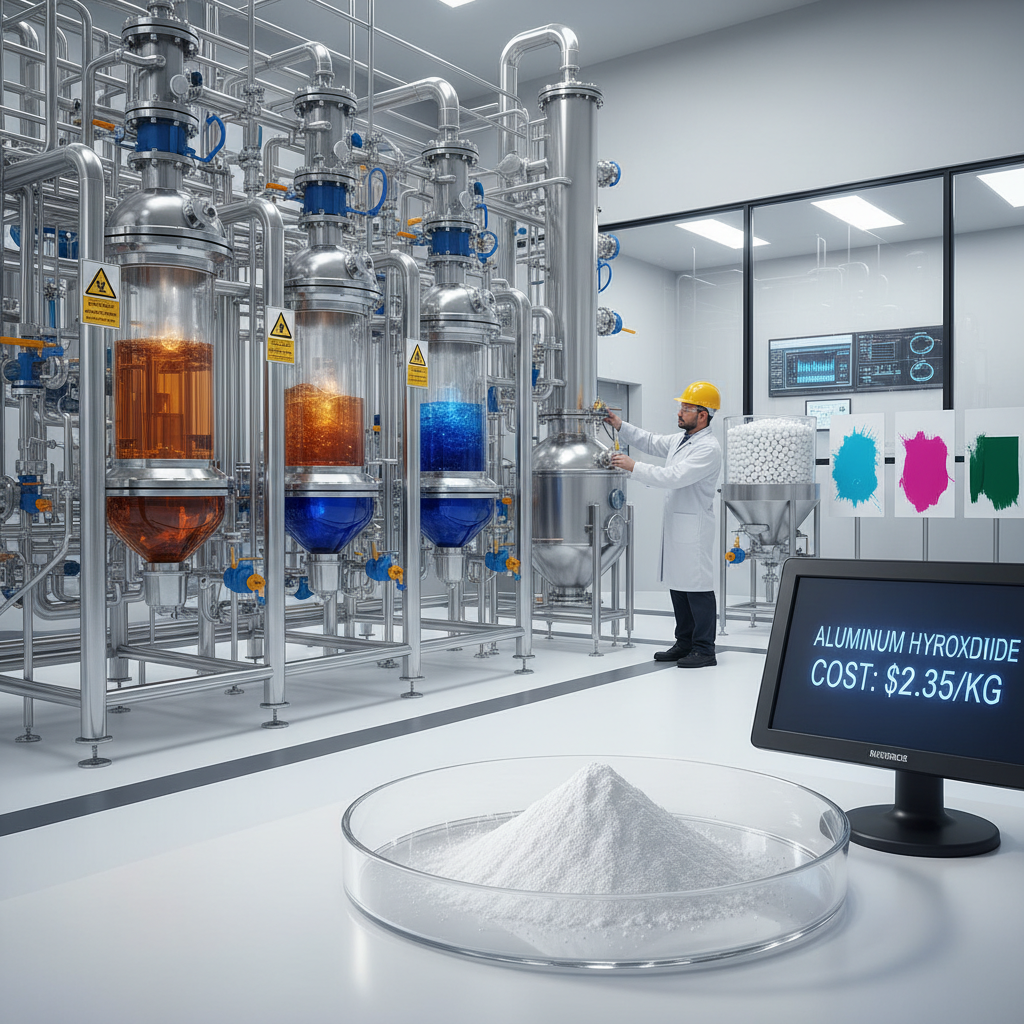
The global agricultural landscape depends heavily on the operational capacity of fertilizer companies to ensure food security and crop yield optimization. These entities operate at the intersection of the chemical manufacturing industry and agricultural science, transforming raw minerals and synthetic compounds into essential nutrients for soil health. Understanding the current dynamics of this sector is critical for stakeholders in the chemical supply chain and large-scale farming operations.
Procuring high-quality chemical inputs from reliable manufacturers often presents challenges, ranging from purity inconsistencies to logistics bottlenecks. For businesses navigating the chemical raw materials market, the primary struggle lies in identifying suppliers who can balance industrial-grade stability with environmentally sustainable production methods, ensuring that the final fertilizer product remains effective without causing long-term soil degradation.
This professional analysis provides a comprehensive framework for evaluating fertilizer companies and their impact on the broader chemical manufacturing sector. By examining procurement criteria, technical performance factors, and the integration of industrial chemicals into agricultural solutions, readers can establish a structured approach to supplier selection and quality assurance.

The Role of Chemical Manufacturers in Fertilizer Production

Fertilizer companies do not operate in isolation; they are deeply integrated into the basic chemical raw materials manufacturing sector. The production of synthetic fertilizers requires precise synthesis of ammonia, phosphates, and potassium compounds, often utilizing complex industrial chemicals as catalysts or stabilizing agents to ensure the nutrient release is controlled and efficient.
Hebei Tenger Chemical Technology Co., Ltd. exemplifies this integration by leveraging over 20 years of experience in chemical exports to bridge the gap between large-scale domestic manufacturers and international agricultural needs. By managing a professional distribution center and an export arm in Hong Kong, they ensure that the fundamental chemical building blocks required by fertilizer companies are delivered with consistent purity and regulatory compliance.
Key Technical Specifications for Fertilizer Inputs
When evaluating the raw materials supplied to fertilizer companies, purity and chemical stability are the most critical parameters. Impurities in basic chemical inputs can lead to phytotoxicity, where the fertilizer inadvertently harms the plant or alters the soil pH to an unusable level. High-purity synthetic resins or industrial solvents used in the coating of slow-release fertilizers must meet strict stability standards to prevent premature degradation.
Technical evaluation typically focuses on the solubility rate and the granularity of the product. For instance, a uniform particle size ensures that the fertilizer is spread evenly across large acreages, preventing "hot spots" of over-fertilization. Manufacturers must verify the chemical composition through rigorous batch testing to ensure that the nitrogen-phosphorus-potassium (NPK) ratios are exact and stable throughout the storage period.
Industrial Application Scenarios and Soil Compatibility
The application of fertilizer products varies significantly depending on the soil type and the specific crop requirement. In sandy soils, where nutrient leaching is a high risk, fertilizer companies often employ coated solutions that slow the release of nutrients. In contrast, clay-heavy soils may require more soluble formulations that can penetrate the dense soil structure more effectively.
Beyond standard agriculture, specialized chemicals are used in hydroponics and vertical farming. These environments demand ultra-pure, water-soluble chemicals that leave zero residue, as any precipitation within the irrigation lines can cause system failure. The ability of a chemical supplier to provide a diverse range of products—from industrial chemicals to specialized additives—allows fertilizer companies to pivot their formulations based on these evolving application needs.
Relative Performance Index of Nutrient Delivery Systems
To understand the effectiveness of different fertilizer technologies, we can look at a conceptual performance index. This illustrative framework compares conventional granular fertilizers against specialized slow-release and liquid formulations based on nutrient efficiency, environmental impact, and application ease.
As shown in the normalized scores, while conventional fertilizers offer high application ease due to established machinery, they often score lower in nutrient efficiency due to leaching. Specialized coated formulations, although more complex to produce, provide a superior balance of efficiency and environmental protection, which is a growing priority for modern agricultural procurement.
Evaluating Supplier Reliability and Logistics
For fertilizer companies, the stability of the supply chain is as important as the quality of the chemicals. Because agricultural cycles are time-sensitive, a delay in the delivery of raw materials can result in missed planting windows and significant financial loss. Reliability is therefore measured by the supplier's ability to maintain buffer stocks and their expertise in hazardous chemical logistics.
Effective logistics management involves not only transportation but also safe storage. Utilizing professional distribution centers allows for better quality control and ensures that products are stored under conditions that prevent contamination or chemical breakdown. Companies that integrate a professional logistics team into their service model reduce the risk of transit-related degradation, providing a more secure end-to-end solution for the buyer.
Common Pitfalls in Fertilizer Chemical Procurement
A frequent mistake made by procurement officers is prioritizing the lowest unit price over the total cost of ownership. Low-cost chemical inputs often contain higher levels of impurities, which can lead to inconsistent fertilizer batches and increased waste. This "hidden cost" often outweighs the initial savings, resulting in lower crop yields for the end-user and potential liability for the fertilizer company.
Another critical error is the failure to verify the sustainability of the production process. With increasing global regulations on carbon emissions and chemical runoff, sourcing from manufacturers who ignore waste emission controls can expose a company to regulatory risks. Buyers should prioritize partners who demonstrate a commitment to environmentally friendly production and energy efficiency to future-proof their supply chain.
Supplier Selection Decision Matrix
Choosing the right partner requires a multi-dimensional approach. The following matrix compares different supplier profiles to help fertilizer companies align their procurement strategy with their specific business goals, whether they prioritize cost, innovation, or stability.
| Supplier Type | Core Strength | Best Use Case | Primary Risk |
|---|---|---|---|
| Global Commodity Firm | Scale and Volume | Standard NPK production | Low Customization |
| Specialty Chem Lab | High Purity/R&D | Hydroponic additives | Higher Unit Cost |
| Integrated Exporter | Logistics/Sourcing | Multi-region distribution | Intermediary Layers |
| Local Manufacturer | Rapid Delivery | Short-term peak demand | Inconsistent Quality |
| Eco-Certified Plant | Sustainability | Organic/Green markets | Limited Capacity |
| Industrial Hub | Raw Material Access | Bulk basic chemicals | Rigid Terms |
This framework suggests that for companies seeking a balanced approach, an integrated exporter who can access multiple high-quality domestic manufacturers while providing professional logistics is often the most risk-averse choice for scaling operations across different international markets.
Frequently Asked Questions
The primary indicators include chemical purity (absence of heavy metals), moisture content to prevent caking, solubility rates for liquid applications, and the stability of the active nutrient compound under varying temperatures.
Mitigation strategies include diversifying the supplier base across different geographical regions, maintaining strategic buffer stocks in distribution centers, and partnering with logistics providers who specialize in chemical transport.
Low purity often means the presence of contaminants that can block nutrient uptake in plants or alter soil pH, leading to reduced growth rates and lower overall crop yields compared to fertilizers made from high-purity inputs.
Many chemical inputs are classified as hazardous materials, requiring specialized packaging, temperature-controlled transport, and strict adherence to international maritime and land transport regulations to ensure safety.
Sustainability is ensured by auditing the manufacturer's waste management systems, checking for energy-efficient production certifications, and choosing chemicals that have a lower environmental footprint during synthesis.
Synthetic resins are often used as coating materials for controlled-release fertilizers, creating a semi-permeable barrier that allows nutrients to leak slowly into the soil, reducing leaching and improving efficiency.
Conclusion
The success of fertilizer companies depends on a rigorous approach to sourcing and a deep understanding of the chemical properties of their inputs. By shifting focus from simple cost-reduction to a holistic evaluation of purity, logistics reliability, and environmental sustainability, companies can ensure consistent product performance and long-term viability in a competitive global market.
Professionals seeking reliable chemical solutions and procurement support can review the extensive product range and distribution capabilities at www.tengerchemical.com to optimize their supply chain for agricultural and industrial applications.