TEL: 0086-311-88862036






Feb . 19, 2025 10:30
Back to list
Monosodium Glutamate (MSG)
Monosodium glutamate (MSG) has been a staple in food seasoning for decades, yet its usage continuously sparks both enthusiasm and contention in culinary and health circles. Bringing light to its significance not as a mythical Chinese restaurant syndrome villain, but as an impactful component in food science and technology carries both intriguing experience and undeniable expertise.
Authoritative voices in food science underline the need for a balanced discussion about MSG, countering pervasive myths with evidence. Restaurateurs, chefs, and food technologists who have delved into MSG's application attest to its effectiveness in enhancing complex flavors and rounding out savory notes in everything from soups and sauces to snacks and ready meals. In this realm, experiential knowledge from culinary practitioners and developers provides insights that are invaluable, emphasizing how MSG's strategic use can lead to both quality advancement and economic benefit in food processing. Moreover, leveraging MSG in food systems can foster sustainability goals by reducing food wastage often associated with flavor inadequacies. Enhancing taste per volume not only enriches consumer experience but also instigates less reliance on overused natural resources while encouraging responsible consumption. Trust in MSG's use requires transparency and traceability in its inclusion within product formulations. Food labels, manufacturing practices, and consumer education remain essential tools to demystify MSG, supporting informed choice making. Labels clarifying MSG's role as a natural flavor enhancer help bridge the gap between consumer apprehension and appreciation, reinforcing trust and credibility for brands willing to embrace MSG within their offerings. In context, the narrative around MSG in food deserves a transformational shift—from controversy and caution to informed embrace and culinary innovation. The resonance of this narrative with both foodie and scientific communities establishes MSG not only as a tool for enhanced flavor experiences but as a cornerstone of forward-thinking food innovation. Brands endeavoring in the prudent use of MSG align themselves with progress, maximizing flavor impact while adhering to evolving food standards and modern consumer preferences. Through this balanced lens, MSG’s story in food shifts from opposition towards opportunity, redefining its role as an ingredient crucially attuned to the palates and priorities of today's discerning eater.

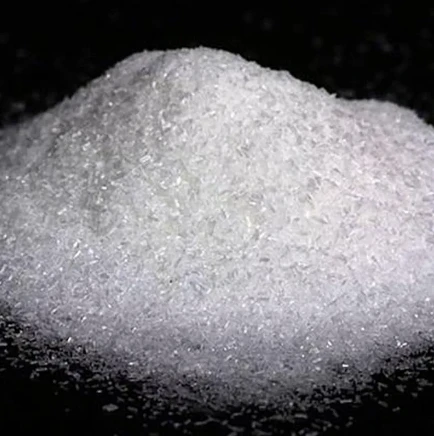
Authoritative voices in food science underline the need for a balanced discussion about MSG, countering pervasive myths with evidence. Restaurateurs, chefs, and food technologists who have delved into MSG's application attest to its effectiveness in enhancing complex flavors and rounding out savory notes in everything from soups and sauces to snacks and ready meals. In this realm, experiential knowledge from culinary practitioners and developers provides insights that are invaluable, emphasizing how MSG's strategic use can lead to both quality advancement and economic benefit in food processing. Moreover, leveraging MSG in food systems can foster sustainability goals by reducing food wastage often associated with flavor inadequacies. Enhancing taste per volume not only enriches consumer experience but also instigates less reliance on overused natural resources while encouraging responsible consumption. Trust in MSG's use requires transparency and traceability in its inclusion within product formulations. Food labels, manufacturing practices, and consumer education remain essential tools to demystify MSG, supporting informed choice making. Labels clarifying MSG's role as a natural flavor enhancer help bridge the gap between consumer apprehension and appreciation, reinforcing trust and credibility for brands willing to embrace MSG within their offerings. In context, the narrative around MSG in food deserves a transformational shift—from controversy and caution to informed embrace and culinary innovation. The resonance of this narrative with both foodie and scientific communities establishes MSG not only as a tool for enhanced flavor experiences but as a cornerstone of forward-thinking food innovation. Brands endeavoring in the prudent use of MSG align themselves with progress, maximizing flavor impact while adhering to evolving food standards and modern consumer preferences. Through this balanced lens, MSG’s story in food shifts from opposition towards opportunity, redefining its role as an ingredient crucially attuned to the palates and priorities of today's discerning eater.
Latest news
-
Aspartame Buyer FAQ: Sweetness, Specifications and ApplicationsNewsNov.02,2026
-
Aluminum Hydroxide FAQ: Specifications, Ordering and Support QuestionsNewsOct.28,2026
-
Improve Crop Yield with Premium Calcium Boron FertilizerNewsJul.01,2026
-
Ultimate Guide to Cal Mag Fertilizer for Boosting Plant HealthNewsJun.29,2026
-
Maximize Crop Recovery Using High Performance Bounce Back FertilizerNewsJun.27,2026
-
Maximize Crop Yields and Soil Health with Biozyme FertilizerNewsJun.26,2026
-
Sustainable Agriculture Guide using bio organic fertilizerNewsJun.25,2026
HOT PRODUCTS
Hebei Tenger Chemical Technology Co., Ltd. focuses on the chemical industry and is committed to the export service of chemical raw materials.
-

view more Tplyltriazole(TTA)Tplyltriazole is a powerful and versatile corrosion inhibitor,it is a white particle or powder that is easily hygroscopic and can be processed into large, small, columnar, fine, or powdered shapes.It is a highly effective solution for preventing rust and corrosion on a variety of metal surfaces, making it an ideal choice for a wide range of applications. -

view more Formic AcidFormic acid, is a colorless, pungent-smelling liquid.With its unique properties and diverse applications that serves a wide range of industrial and commercial applications. -

view more Aluminum HydroxideAluminum Hydroxide, a versatile and essential product for a wide range of applications.This product is a white, amorphous powder that is insoluble in water and has a variety of uses in industries such as pharmaceuticals, cosmetics, and manufacturing.