





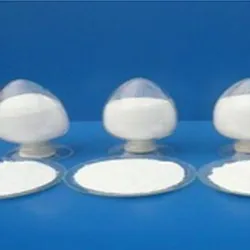
Aluminum Hydroxide, a versatile and essential product for a wide range of applications. This product is a white, amorphous powder that is insoluble in water and has a variety of uses in industries such as pharmaceuticals, cosmetics, and manufacturing.
One of the main features of aluminum hydroxide is its excellent flame retardant properties. It can effectively inhibit the spread of flames and is therefore widely used in the manufacture of flame-retardant materials such as wires and cables, building materials and automobile parts. In addition, aluminum hydroxide also has good thermal and chemical stability and can maintain stability in high temperatures and corrosive environments, so it is widely used in the aerospace, chemical and electronic industries.
In addition to its flame retardant properties, aluminum hydroxide also has good filling properties. It can be added as a filler to plastics, rubbers and resins to increase their strength and hardness while reducing costs. This makes aluminum hydroxide widely used in plastic products, rubber products and composite materials.
In addition, aluminum hydroxide also has good hygroscopic properties and stable chemical properties, making it an important raw material for the preparation of various chemicals and pharmaceuticals. It is widely used in the manufacture of acid and alkali resistant materials, pharmaceutical intermediates, cosmetics and other products.
In short, aluminum hydroxide is a multifunctional chemical raw material with excellent flame retardant properties, filling properties and chemical stability, and is suitable for many industries. Our products comply with international standards, have reliable quality and reasonable prices. We look forward to working with you to provide you with high-quality aluminum hydroxide products and services.
Brand | Al2O3% | SiO2% | Fe2O3% | Na2O% | L.O.I% | Moisture | -45um% |
≥ | ≤ | ≤ | ≤ | ≤ | ≤ | ||
HA-H | 64.5 | 0.02 | 0.008 | 0.4 | 34.5±0.7 | 0.1 | 5-10 |
▪ In the pharmaceutical industry, our Aluminum Hydroxide is widely used as an antacid to neutralize excess stomach acid and provide relief from heartburn and indigestion.
▪ In the cosmetics industry, our Aluminum Hydroxide is valued for its gentle exfoliating properties, making it a popular ingredient in facial scrubs and other skincare products.
▪ The flame retardant properties of Aluminum Hydroxide make it an important component in the production and processing of cables, textiles, and building materials.
▪ Aluminum Hydroxide is a crucial component in the production of ceramics, where it acts as a filler and reinforcement agent, enhancing the strength and durability of ceramic products.
▪ Aluminum Hydroxide is also utilized in the manufacturing of glass, where it acts as a flux to lower the melting point of the raw materials, facilitating the production of high-quality glass products with improved clarity and strength.
How Does Aluminum Hydroxide Work as a Flame Retardant?
Aluminum hydroxide is widely used as a flame retardant and smoke suppressant in many polymer and composite applications. Its effectiveness comes mainly from its thermal decomposition behavior. When exposed to elevated temperatures, aluminum hydroxide releases water in the form of vapor and undergoes an endothermic decomposition reaction. This process absorbs a significant amount of heat from the surrounding material, helping reduce the temperature of the polymer and slowing down the combustion process.
During decomposition, aluminum hydroxide also produces alumina, which can contribute to the formation of a protective barrier on the surface of the material. This barrier helps reduce heat transfer and limits the contact between the underlying polymer and oxygen. At the same time, the release of water vapor can dilute combustible gases generated during polymer degradation. These combined effects make aluminum hydroxide an effective halogen-free flame-retardant filler.
Understanding how aluminum hydroxide is used is important when developing flame-retardant plastics, rubber products, cables, coatings, and other composite materials. The particle size, purity, surface treatment, and loading level can all influence its performance. Fine grades may provide better dispersion and surface interaction, while specially treated grades can improve compatibility with hydrophobic polymer systems.
Another important consideration is processing temperature. Since aluminum hydroxide begins to decompose at relatively moderate temperatures, material selection should take processing conditions into account. Manufacturers also need to balance flame-retardant performance with mechanical properties and processing characteristics.
From a commercial perspective, aluminum hydroxide cost and aluminum hydroxide price can vary according to purity, particle size, surface modification, production method, and order volume. Therefore, selecting the appropriate grade requires more than simply comparing prices. The relationship between aluminum and hydroxide provides the material with its useful thermal decomposition characteristics, making it an important option for safer, halogen-free formulations.
How to Choose Aluminum Hydroxide for Flame Retardant Applications
Choosing the right aluminum hydroxide for flame-retardant applications requires careful consideration of both technical requirements and production conditions. Although aluminum hydroxide is commonly available in different grades, not every grade provides the same performance in a particular polymer system.
The first factor to consider is purity. High-purity aluminum hydroxide can provide more consistent thermal behavior and reduce the risk of unwanted impurities affecting the final product. Particle size is another important consideration. Smaller particles can improve dispersion and surface contact, while larger particles may sometimes offer advantages in processing efficiency and filler loading. The appropriate particle size depends on the polymer matrix and the required mechanical and flame-retardant properties.
Surface treatment should also be evaluated. Untreated aluminum hydroxide may have limited compatibility with certain hydrophobic polymers. Surface-modified grades can improve dispersion, reduce filler-polymer interfacial problems, and help maintain the mechanical properties of the finished material. Therefore, understanding the intended aluminum hydroxide use is essential before selecting a grade.
Processing temperature is equally important. Because aluminum hydroxide releases water when heated, its thermal stability must be compatible with the processing conditions of the polymer. If the processing temperature is too close to its decomposition range, premature water release may affect production quality.
Cost is another practical factor. Aluminum hydroxide cost is influenced by purity, particle size distribution, surface treatment, manufacturing technology, and purchasing volume. When comparing aluminum hydroxide price, buyers should consider total formulation cost rather than the material price alone. A higher-priced grade may provide better dispersion or allow optimized loading, potentially reducing overall production expenses.
Finally, manufacturers should evaluate the balance between flame-retardant efficiency, mechanical performance, processing behavior, and cost. The chemical combination of aluminum and hydroxide gives this filler its characteristic endothermic decomposition, making it suitable for many halogen-free flame-retardant formulations. Selecting the right grade based on actual application requirements can help achieve reliable performance and consistent product quality.
Benefits of Aluminum Hydroxide as a Filler
Aluminum hydroxide is an important inorganic filler used in plastics, rubber, adhesives, coatings, cables, and composite materials. In addition to its flame-retardant function, it can provide several formulation benefits, making it attractive for manufacturers seeking multifunctional filler solutions.
One of the main advantages is its ability to absorb heat during thermal decomposition. When heated, aluminum hydroxide releases water and forms alumina. This endothermic reaction can help reduce the temperature of the surrounding material and contribute to improved flame resistance. For this reason, aluminum hydroxide use is particularly common in halogen-free flame-retardant systems.
Another benefit is smoke suppression. Compared with some traditional flame-retardant technologies, aluminum hydroxide can help reduce smoke generation in certain polymer formulations. This characteristic can be valuable in applications such as electrical components, construction materials, and transportation-related products where smoke control is an important safety consideration.
Aluminum hydroxide can also serve as a cost-effective mineral filler. Depending on the formulation, it may partially replace more expensive functional additives while maintaining the required performance. However, aluminum hydroxide cost and aluminum hydroxide price vary according to grade, purity, particle size, surface treatment, and supply conditions. Buyers should therefore evaluate both technical performance and total formulation economics.
Another advantage is its halogen-free composition. The combination of aluminum and hydroxide provides a useful mechanism for heat absorption and water release without relying on halogen-containing chemistry. This makes aluminum hydroxide attractive for manufacturers developing more environmentally considerate flame-retardant materials.
The physical characteristics of the filler can also influence processing and final product properties. Properly selected particle size and surface treatment can improve dispersion and compatibility with the polymer matrix. Therefore, the most suitable grade depends on the specific application, resin type, processing method, and required flame-retardant level.
Overall, aluminum hydroxide offers a combination of flame retardancy, smoke suppression, filler functionality, and formulation flexibility. When the appropriate grade is selected, it can help manufacturers develop safer and more economical polymer and composite products.
aluminum and hydroxide
aluminum hydroxide
aluminum hydroxide antacid
aluminum hydroxide dried gel
aluminum hydroxide gel


