





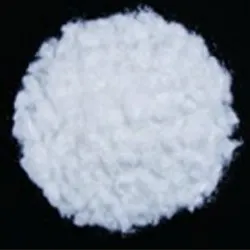
1,2,3--Benzotriazole is an efficient light stabilizer widely used in plastics, coatings, rubber and other materials. It can effectively absorb ultraviolet rays, extend the service life of materials, and reduce color fading and surface aging. Benzotriazole is easily soluble in alcohol, benzene, toluene, chloroform and DMF, slightly soluble in water.It is urn red in air with oxidation.Benzotriazole can also improve the weather resistance and heat resistance of the material, making it more suitable for use in outdoor environments and high temperature conditions.
In addition to being a light stabilizer, benzotriazole also has antioxidant and anti-rust properties. It can effectively prevent materials from oxidation and corrosion, maintaining the original performance and appearance of materials. This makes benzotriazole an indispensable chemical in many industrial and manufacturing fields.
Benzotriazole is also widely used in the production of dyes and pigments. It can be used as an intermediate to participate in the synthesis of various pigments and dyes, giving products bright colors and excellent durability. At the same time, benzotriazole can also improve the stability of dyes and pigments, allowing them to maintain good color and performance under different environments and conditions.
Our benzotriazole products have high purity, stability and reliability and can meet the needs of different customers. We have advanced production technology and strict quality control system to ensure that the quality of our products is always in the leading position. We also offer product options in a variety of specifications and packaging to meet our customers' individual needs.
ITEMS | SPECIFICATION |
Appearance | FINE GRANULAR |
Assay | 99.50% min |
Melting Point | 97℃ min |
Moisture | 0. 1% max |
Ash content | 0.05% max |
Aqueous pH | 5.0-6.0 |
Chroma | 40MAX |
Used as anti-rust and anti-corrosion agent for metals as silver, copper, lead, cast iron, nickel, and zinc, anti-fading agent for copper, silver, zinc ect.; additives for coatings, oil products (e.g. oil for metal cutting), antiseptic and anticoagulant agent for synthetic detergents, plant growth regulator, antifreezes for automobile, antifoggant for photograph, stabilizer for polymers and organic intermediate. As a good UV-absorbent itself. It is used as stabilizer for product susceptible to UV ray, e.g. to prevent fading of anti-fading azo-dyes. It is also used in treating paper, textile, film, metal coins for anti-fading of color. Used with various anti scaling compounds, fungicides and algaecides, it has good anti-corrosion effect for cycling cooling water system.
Net plastic woven bag or fiber drum with black plastic bags inside. fiber drum iron drum.
Corrosion inhibition of copper is important in many industrial applications because copper can react with oxygen, moisture, and other chemical species on its surface. Benzotriazole is one of the most widely used organic corrosion inhibitors for protecting copper and copper alloys. Its effectiveness is mainly related to its ability to interact with the copper surface and form a protective film.
When benzotriazole is introduced into a system containing copper, its molecules can adsorb onto the metal surface. The nitrogen atoms in the benzotriazole molecule have a strong affinity for copper, allowing the inhibitor to interact with copper atoms and corrosion products. This interaction can produce a stable, thin protective layer that separates the copper surface from aggressive components in the surrounding environment.
The protective film formed by benzotriazole helps reduce both anodic and cathodic corrosion reactions. In practical terms, it limits the contact between copper and substances such as dissolved oxygen, water, and certain ions that can accelerate corrosion. As a result, the rate at which copper dissolves or develops unwanted corrosion products can be significantly reduced.
Benzotriazole is particularly useful because it can remain effective at relatively low concentrations. It is therefore commonly considered for applications involving cooling-water systems, industrial equipment, electronics, and copper-containing components. Different formulations may also use related compounds or derivatives, including materials sometimes discussed alongside 1 2 3 benzotriazole, depending on the specific chemical and industrial context.
Overall, the corrosion protection provided by benzotriazole comes from surface adsorption and the formation of a protective copper–inhibitor film. By creating this barrier, benzotriazole helps maintain copper's surface condition and extends the service life of copper components.
A metal passivator is a substance that helps reduce the reactivity of a metal surface and protects it from corrosion. Benzotriazole is widely recognized as an effective passivating agent for copper and copper alloys because of its strong interaction with copper surfaces.
The passivation process begins when benzotriazole molecules reach the metal surface. Because of the chemical affinity between benzotriazole and copper, the molecules can become adsorbed onto the surface. This adsorption contributes to the formation of a compact protective film. The resulting layer acts as a barrier between the copper and its surrounding environment.
One important advantage of benzotriazole is that its protective action does not simply depend on creating a physical coating. Its molecular structure allows it to interact chemically with the copper surface and corrosion products. The resulting protective layer can make the copper surface less susceptible to further electrochemical reactions.
This property makes benzotriazole useful in applications where copper must remain stable for long periods. For example, it can be incorporated into corrosion-control formulations for cooling systems, metalworking fluids, industrial water treatment, and other environments where copper or copper alloys are exposed to moisture and potentially corrosive substances.
The concentration, temperature, pH, water chemistry, and presence of other metals can all influence the performance of benzotriazole. Therefore, selecting the appropriate formulation and dosage is important for achieving reliable passivation.
The term 1 2 3 benzotriazole may also appear in chemical discussions and product-related searches, but it is important to verify the exact chemical identity and specification intended by a supplier or technical document. In professional applications, the CAS number, purity, molecular structure, and formulation should be checked rather than relying only on a general product name.
Overall, benzotriazole works as a metal passivator by interacting with the copper surface and creating a protective film that suppresses corrosion reactions. This combination of surface affinity and corrosion inhibition makes it an important material for copper protection.
Different corrosion inhibitors are designed to protect metals under different environmental conditions. Benzotriazole is particularly well known for protecting copper and copper alloys, while other inhibitors may be better suited to steel, aluminum, or mixed-metal systems. Understanding these differences is important when selecting a corrosion-control solution.
One of the main advantages of benzotriazole is its strong affinity for copper. When applied under suitable conditions, it can form a protective film on the copper surface and reduce electrochemical corrosion reactions. This makes it especially valuable in systems containing copper components, such as heat exchangers, cooling-water equipment, and industrial circulation systems.
Other corrosion inhibitors work through different mechanisms. For example, some compounds primarily reduce anodic metal dissolution, while others influence cathodic reactions. Certain inhibitors can also form precipitated films or modify the chemical environment surrounding the metal. Compared with these materials, benzotriazole is often selected when targeted protection of copper is required.
Another consideration is compatibility. In a system containing several metals, an inhibitor must provide protection without creating undesirable effects on other components. The effectiveness of benzotriazole can also depend on pH, temperature, water quality, inhibitor concentration, and the presence of oxidizing agents or other chemicals.
The term 1 2 3 benzotriazole may be encountered in searches for benzotriazole-related chemicals, but buyers and formulators should confirm the precise substance before making a comparison. Different benzotriazole derivatives can have different solubility, stability, and performance characteristics.
Ultimately, there is no single corrosion inhibitor that is ideal for every application. Benzotriazole offers a strong option for copper protection because of its surface-film-forming and passivating properties. However, the best inhibitor should be selected according to the metal, operating environment, water chemistry, required protection level, and regulatory or formulation requirements.
1 2 3 benzotriazole
1 hydroxy benzotriazole
benzotriazole
benzotriazole cas
cas 95 14 7


