





Sodium Benzoate as a Preservative in Food Products Explained
Sodium Benzoate as a Preservative Safety, Applications, and Regulations
Sodium benzoate is a widely used preservative derived from benzoic acid, commonly found in various food products, beverages, and cosmetics. Known for its ability to inhibit the growth of mold, yeast, and some bacteria, sodium benzoate plays a crucial role in extending shelf life and enhancing the safety of consumables. This article explores the properties, applications, safety concerns, and regulatory aspects of sodium benzoate as a preservative.
Properties of Sodium Benzoate
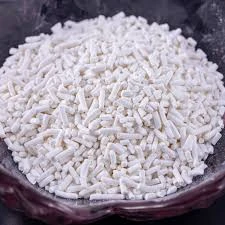
Sodium benzoate is the sodium salt of benzoic acid, appearing as a white crystalline powder or granules that are highly soluble in water. Its chemical formula is C7H5NaO2, and it possesses a low toxicity profile, making it a preferred choice for food preservation. The preservative functions effectively in acidic environments (pH below 7), where it transforms into benzoic acid, the active form that inhibits microbial growth. This characteristic makes sodium benzoate particularly suitable for products like carbonated soft drinks, fruit juices, pickles, and salad dressings, which often maintain a low pH.
Applications in Food and Beverage Industry
In the food industry, sodium benzoate is commonly used to prevent spoilage and maintain flavor integrity. It is particularly effective against microorganisms that thrive in acidic conditions, such as Aspergillus and Candida species. For example, sodium benzoate is added to sodas and fruit juices to curb the growth of yeast and molds during production and storage.
Beyond food items, sodium benzoate is employed in cosmetics and personal care products to inhibit microbial growth, ensuring product stability and safety
. Its application ranges from creams and lotions to shampoos and deodorants, where it acts as a protective agent against contamination and spoilage.sodium benzoate is preservative
Safety and Health Concerns
Despite its widespread use, there have been health concerns associated with sodium benzoate, particularly regarding its potential to form benzene, a known carcinogen, when exposed to high temperatures or in the presence of ascorbic acid (vitamin C). Studies have indicated that under certain conditions, sodium benzoate can react with ascorbic acid to produce benzene, raising alarms about its safety in consumables.
However, the concentrations of sodium benzoate used in products are regulated. Most health organizations, including the U.S. Food and Drug Administration (FDA) and the European Food Safety Authority (EFSA), recognize sodium benzoate as safe at levels commonly found in food and food products. The acceptable daily intake (ADI) for sodium benzoate has been established to ensure consumer safety.
Regulatory Aspects
Sodium benzoate is subject to strict regulations across different countries. In the United States, it is classified as Generally Recognized As Safe (GRAS) by the FDA when used in accordance with specific guidelines. In the European Union, sodium benzoate is assigned the E number E211, indicating its permissible use in food products at certain concentrations. Regulatory agencies continuously monitor and assess the safety of sodium benzoate, ensuring that consumers are protected from potential risks associated with its use.
Conclusion
In summary, sodium benzoate serves as an effective preservative in the food and beverage industry, as well as in cosmetics and personal care products. Its ability to inhibit microbial growth in acidic environments makes it invaluable for preventing spoilage and ensuring product longevity. While safety concerns persist, particularly regarding benzene formation, regulatory agencies continue to affirm that sodium benzoate is safe for consumption within established limits. As the food industry evolves, consumers can rest assured that sodium benzoate, when used responsibly, remains a safe and effective choice for preservation without compromising product quality.
-
How to Choose Dimethyl Disulfide DMDS for Industrial UseNewsNov.09,2026
-
Aspartame Buyer FAQ: Sweetness, Specifications and ApplicationsNewsNov.02,2026
-
Aluminum Hydroxide FAQ: Specifications, Ordering and Support QuestionsNewsOct.28,2026
-
Improve Crop Yield with Premium Calcium Boron FertilizerNewsJul.01,2026
-
Ultimate Guide to Cal Mag Fertilizer for Boosting Plant HealthNewsJun.29,2026
-
Maximize Crop Recovery Using High Performance Bounce Back FertilizerNewsJun.27,2026
-
Maximize Crop Yields and Soil Health with Biozyme FertilizerNewsJun.26,2026
Hebei Tenger Chemical Technology Co., Ltd. focuses on the chemical industry and is committed to the export service of chemical raw materials.
-

view more Tplyltriazole(TTA)Tplyltriazole is a powerful and versatile corrosion inhibitor,it is a white particle or powder that is easily hygroscopic and can be processed into large, small, columnar, fine, or powdered shapes.It is a highly effective solution for preventing rust and corrosion on a variety of metal surfaces, making it an ideal choice for a wide range of applications. -

view more Formic AcidFormic acid, is a colorless, pungent-smelling liquid.With its unique properties and diverse applications that serves a wide range of industrial and commercial applications. -

view more Aluminum HydroxideAluminum Hydroxide, a versatile and essential product for a wide range of applications.This product is a white, amorphous powder that is insoluble in water and has a variety of uses in industries such as pharmaceuticals, cosmetics, and manufacturing.