





Exploring the Role of Thickening Agents in Food Production and Culinary Applications
Thickening Food Additives Enhancing Texture and Stability in Culinary Creations
In the world of food production and culinary arts, texture plays a pivotal role in the overall eating experience. One of the key components that contribute to this texture is the use of thickening food additives. These additives serve a crucial function, transforming liquids into thicker, more stable forms, and enhancing the mouthfeel of various dishes. Understanding the different types of thickening agents and their applications can significantly improve both home cooking and industrial food preparation.
Thickening agents are substances that, when added to a liquid, increase its viscosity without substantially altering its other properties. Some common thickening agents include starches, gums, and proteins. Among these, starches, derived from both plant and cereal sources, are among the most widely used. Cornstarch and potato starch, for instance, are staples in many kitchens. They work by absorbing water and swelling during heating, which results in a smooth, viscous consistency.
Another popular category of thickeners is gums, which are polysaccharides derived from various natural sources. Xanthan gum, guar gum, and locust bean gum are some examples that not only thicken but also stabilize emulsions and foams. They are particularly favored in gluten-free cooking, where achieving the right texture can be challenging. Gums are effective at low concentrations, making them cost-effective additives for both food manufacturers and home cooks.
Proteins, such as gelatin or collagen, also serve as effective thickening agents. These are particularly popular in the preparation of desserts, where a firmer texture is desired. Gelatin, for instance, is used to create jellies, mousses, and panna cotta. It works by forming a network that traps water, resulting in a gel-like consistency. Vegetarian alternatives, such as agar-agar, derived from seaweed, have also gained popularity for those seeking plant-based options.
thickening food additive
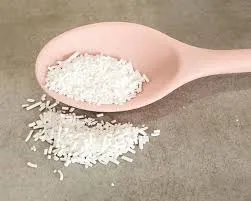
The application of thickening agents transcends traditional cooking. In the food industry, they are instrumental in improving product stability and shelf life. For example, sauces, gravies, and soups often incorporate thickening agents to achieve a desirable consistency that enhances consumer appeal. They also play a significant role in preventing separation in products like salad dressings and dairy-based items.
While there are many advantages to using thickening additives, it is crucial to consider their impact on nutrition and consumer preferences. Many modern consumers are becoming increasingly aware of what goes into their food, driving demand for clean-label products. As a result, there is a growing trend toward using natural and minimally processed thickening agents. This shift encourages food manufacturers to innovate and find alternatives that meet both functional and health-oriented criteria.
When using thickening agents at home, it's essential to understand the appropriate methods of incorporation. For instance, mixing cornstarch with cold water to create a slurry before adding it to a hot liquid ensures a smooth texture without lumps. Similarly, when using gelatin, it should be bloomed in cold water before being melted and combined with warm ingredients to achieve the desired gel structure.
In conclusion, thickening food additives are indispensable tools in both culinary and food manufacturing realms. They not only enhance the visual appeal and mouthfeel of various dishes but also play a vital role in product stability and consumer satisfaction. As the food industry continues to evolve, the focus on natural and innovative thickening solutions will likely shape future culinary trends, allowing chefs and home cooks alike to create dishes that are as enjoyable to eat as they are to look at. Understanding and mastering these agents opens up a world of culinary possibilities, ensuring that textures are perfected in every bite.
-
How to Choose Dimethyl Disulfide DMDS for Industrial UseNewsNov.09,2026
-
Aspartame Buyer FAQ: Sweetness, Specifications and ApplicationsNewsNov.02,2026
-
Aluminum Hydroxide FAQ: Specifications, Ordering and Support QuestionsNewsOct.28,2026
-
Improve Crop Yield with Premium Calcium Boron FertilizerNewsJul.01,2026
-
Ultimate Guide to Cal Mag Fertilizer for Boosting Plant HealthNewsJun.29,2026
-
Maximize Crop Recovery Using High Performance Bounce Back FertilizerNewsJun.27,2026
-
Maximize Crop Yields and Soil Health with Biozyme FertilizerNewsJun.26,2026
Hebei Tenger Chemical Technology Co., Ltd. focuses on the chemical industry and is committed to the export service of chemical raw materials.
-

view more Tplyltriazole(TTA)Tplyltriazole is a powerful and versatile corrosion inhibitor,it is a white particle or powder that is easily hygroscopic and can be processed into large, small, columnar, fine, or powdered shapes.It is a highly effective solution for preventing rust and corrosion on a variety of metal surfaces, making it an ideal choice for a wide range of applications. -

view more Formic AcidFormic acid, is a colorless, pungent-smelling liquid.With its unique properties and diverse applications that serves a wide range of industrial and commercial applications. -

view more Aluminum HydroxideAluminum Hydroxide, a versatile and essential product for a wide range of applications.This product is a white, amorphous powder that is insoluble in water and has a variety of uses in industries such as pharmaceuticals, cosmetics, and manufacturing.