Formic acid 85 price, it's more than just a number on a datasheet, folks. It's the linchpin in a lot of processes, from leather tanning to silage preservation, and increasingly, in newer applications like fuel cells and even de-icing fluids. Understanding what drives that price – and how to get a stable, reliable supply – is critical. We're talking about impacts on everything from your feed costs if you're in agriculture to your production timelines if you're in manufacturing. It's a surprisingly complex market, and a few percentage points fluctuation can make or break a budget.
For years, it was a relatively stable commodity. But recent global events, coupled with increased demand from emerging technologies, have created a lot of volatility. You’ve got supply chain disruptions, raw material costs swinging wildly, and logistical headaches adding to the price tag. And it’s not just about buying it; it’s about the total landed cost – shipping, handling, storage, and ensuring you're getting a quality product that meets your specs. That’s what keeps me up at night, ensuring consistent supply at a predictable cost.
What's really driving the conversation now is the push for sustainable alternatives. Formic acid is increasingly seen as a greener option compared to some harsher chemicals, and that demand is putting pressure on the existing production capacity. Knowing where your formic acid 85 price is coming from, and what its carbon footprint looks like, is becoming a bigger and bigger part of the equation.
The Global Landscape of formic acid 85 price
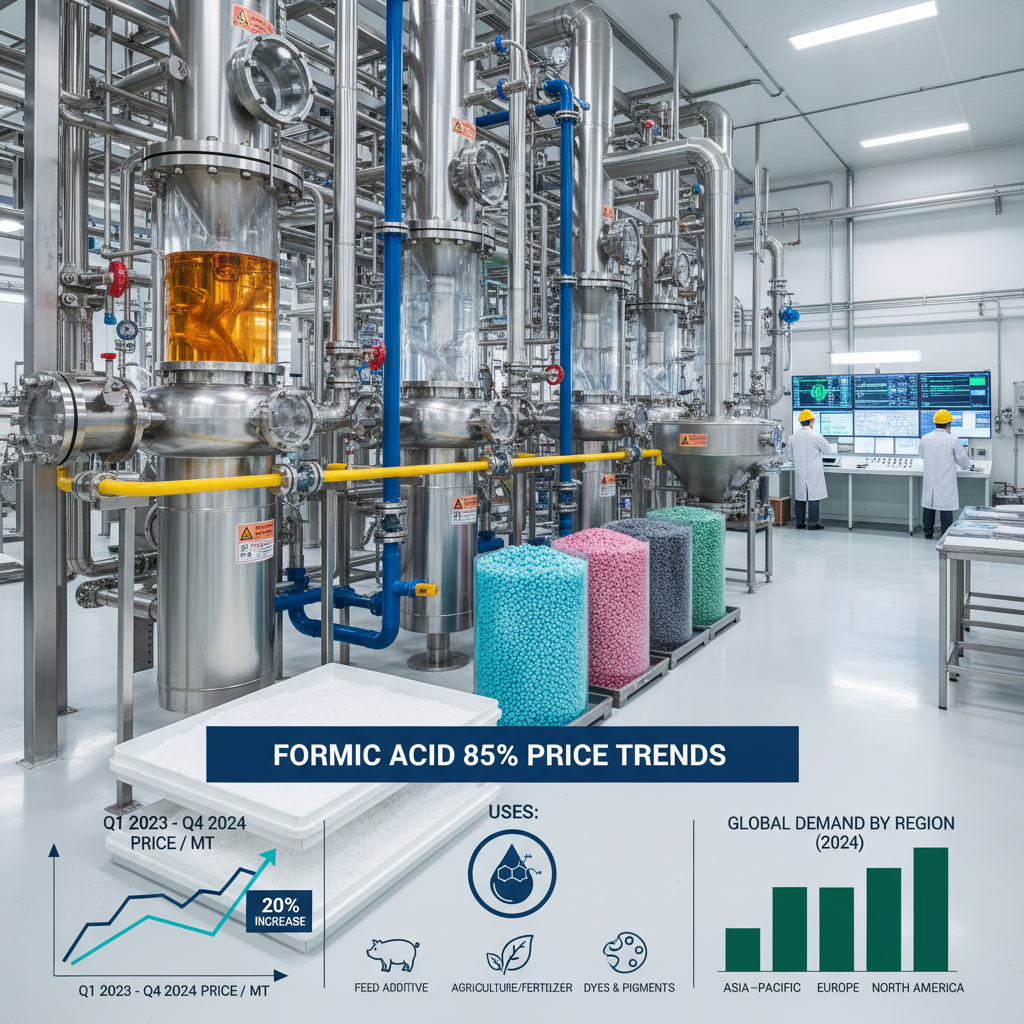
The global formic acid market is significant, valued at around USD 720 million in 2023 and projected to reach over USD 980 million by 2032 (Source: Market Research Future). Asia-Pacific dominates production and consumption, with China being the largest producer. The price, however, isn't uniform globally. It's heavily influenced by regional supply and demand, transportation costs, and even local regulations. We’re seeing increasing demand in Europe and North America, driven by the growth of the fuel cell industry and the demand for sustainable agricultural practices.
A key challenge is the reliance on a relatively small number of large-scale producers. Disruptions at even one major facility can send ripple effects through the entire market. Geopolitical factors, like trade tariffs and political instability in key producing regions, also play a role. Keeping a finger on the pulse of these global dynamics is essential for anyone relying on formic acid 85 price for their operations.
Defining Formic Acid 85 Price and its Significance
Formic acid 85 price refers to the cost of formic acid with an 85% concentration – it’s the industry standard for many applications. The '85' signifies the percentage of pure formic acid in the solution; the rest is typically water. Why 85%? It offers a good balance between concentration, handling safety, and cost. Higher concentrations are possible, but they come with increased hazards and require specialized equipment. The price, naturally, is quoted per metric ton or per drum, and can vary significantly depending on quantity and contract terms.
Its significance stems from its versatility. It's a crucial component in preserving animal feed, preventing mold and bacterial growth. It’s also used in the textile industry for dyeing and finishing, in the rubber industry as a coagulant, and increasingly, in the pharmaceutical and chemical industries as a building block for other compounds. In the context of modern industry, formic acid is vital to a whole spectrum of production processes, making price stability and availability a crucial concern.
In humanitarian applications, formic acid is used in the production of formaldehyde, which is used in resins and disinfectants, which are vital for temporary shelter construction and sanitation in disaster relief scenarios. Knowing the formic acid 85 price impacts the speed and efficiency of these responses.
Key Factors Influencing formic acid 85 price
Several factors combine to determine the formic acid 85 price. Firstly, the cost of methanol, which is a primary feedstock for formic acid production, has a major impact. When methanol prices rise, so does the price of formic acid. Secondly, production capacity and utilization rates are crucial. If demand exceeds supply, prices naturally increase. And thirdly, transportation costs are a significant component, particularly for buyers located far from production facilities.
Beyond these core factors, energy costs play a role. Formic acid production is an energy-intensive process, and fluctuations in energy prices can affect overall production costs. Environmental regulations also contribute – stricter regulations regarding emissions and waste disposal can increase production expenses. Finally, currency exchange rates can influence the price, particularly for international buyers and sellers.
And let’s not forget the impact of trade policies. Tariffs and trade agreements can significantly affect the cost of importing and exporting formic acid, creating regional price differences. Keeping track of these dynamics requires constant monitoring and a deep understanding of the global market. formic acid 85 price fluctuates, so keeping informed is key.
Global Applications and the Impact on formic acid 85 price
The demand for formic acid across diverse applications significantly impacts formic acid 85 price. The largest single consumer remains the leather industry, utilizing it for tanning and pH regulation. Agriculture, specifically silage preservation, represents a substantial and growing market. The growing demand for high-quality livestock feed is driving increased formic acid consumption.
More recently, the fuel cell industry has emerged as a major demand driver. Formic acid is used as a liquid fuel carrier in direct formic acid fuel cells (DFAFCs), offering a clean and efficient energy source. This demand is particularly strong in the portable power and automotive sectors. In post-disaster relief operations, formic acid is used in sanitation and water purification, providing critical support to affected communities.
Formic Acid 85 Price Drivers
Advantages and Long-Term Value Considerations
Investing in a reliable supply of formic acid 85 price isn’t just about the immediate cost. It's about mitigating risk and ensuring operational continuity. A stable supply minimizes disruptions to your production processes, preventing costly downtime. And, increasingly, choosing suppliers committed to sustainable practices can enhance your company’s reputation and appeal to environmentally conscious consumers.
From a long-term perspective, formic acid offers advantages over some alternative chemicals. It's biodegradable, reducing environmental impact, and it's relatively safe to handle when compared to more hazardous substances. That translates to lower safety costs and reduced regulatory burdens. For instance, in silage preservation, using formic acid effectively improves feed quality and reduces livestock health issues, ultimately boosting profitability.
Future Trends and Innovations Affecting formic acid 85 price
The biggest trend, undoubtedly, is the expansion of formic acid's role in energy storage. As fuel cell technology matures and becomes more widespread, demand will continue to surge. We’re also seeing research into new production methods that could lower costs and reduce reliance on fossil fuels. Electrocatalytic reduction of CO2 to formic acid is one promising avenue, though it’s still in the early stages of development.
Digitalization and supply chain optimization will also play a crucial role. Using data analytics to forecast demand and optimize logistics can help reduce costs and ensure timely delivery. Blockchain technology could enhance transparency and traceability throughout the supply chain, building trust and reducing the risk of fraud.
Challenges and Solutions in the formic acid 85 price Supply Chain
Right now, the biggest challenge is supply chain vulnerability. A few key producers control a large share of the market, and any disruption can have a cascading effect. Geopolitical tensions and natural disasters pose ongoing risks. The quality of formic acid can also vary significantly between suppliers, leading to inconsistencies in performance.
The solution lies in diversification of sourcing. Building relationships with multiple suppliers, across different regions, can reduce your reliance on any single source. Implementing robust quality control measures, including independent testing and certification, is also critical. Long-term contracts with key suppliers can provide price stability and ensure a consistent supply.
Furthermore, investing in local or regional production capacity can reduce transportation costs and mitigate supply chain risks. It's about building a resilient supply chain that can withstand unforeseen disruptions and deliver consistent value.
Overview of Key Considerations for Formic Acid 85 Price Negotiation
| Supplier Reliability |
Contract Duration |
Quality Assurance |
Payment Terms |
| Proven track record of consistent supply |
Longer-term contracts (1-3 years) for price stability |
Independent lab testing and certification |
Negotiate favorable payment schedules and discounts |
| Financial stability and capacity to meet demand |
Review contract renewal options and escalation clauses |
Regular audits of supplier quality control processes |
Consider letter of credit options for security |
| Responsiveness to inquiries and issue resolution |
Evaluate potential penalties for non-compliance |
Verify compliance with industry standards (ISO, etc.) |
Explore volume discounts for larger orders |
| Geographic diversification of supply sources |
Understand market trends and price forecasts |
Request sample analysis reports for each batch |
Early payment discounts or rebates |
| Commitment to sustainable practices |
Assess supplier's risk management plan |
Review supplier's insurance coverage |
Negotiate currency exchange rate protection |
| Transparency in pricing and cost structure |
Benchmark pricing against industry averages |
Conduct site visits to assess supplier facilities |
Consider consignment stock arrangements |
FAQS
The price of methanol, the primary raw material, is a huge driver. Supply chain disruptions, geopolitical events affecting methanol production, and even weather patterns influencing feedstock availability all play a role. Increased demand from new applications, like fuel cells, can also create sudden spikes in price. Regularly monitoring these factors is crucial for informed procurement decisions.
Longer-term contracts (1-3 years) generally offer more price stability. Negotiate price escalation clauses carefully, tying them to transparent indices rather than subjective factors. Diversifying your supplier base and building strong relationships with multiple vendors also creates leverage. Consider volume discounts and explore options for consignment stock arrangements.
Always request a Certificate of Analysis (CoA) from your supplier for each batch. Conduct independent lab testing to verify the concentration, purity, and absence of contaminants. Ensure your supplier is ISO-certified and has robust quality control processes in place. Regular audits of their facilities can provide additional assurance.
Increasing demand for sustainably produced formic acid is driving up the cost of greener production methods. Suppliers investing in renewable energy and CO2 capture technologies may charge a premium, but this can translate to a lower carbon footprint for your operations. Consumers are increasingly willing to pay a higher price for sustainable products.
Subscribe to industry publications, follow market research reports, and network with other professionals in your field. Monitor methanol price fluctuations and geopolitical events affecting key producing regions. Regularly engage with your suppliers to discuss market trends and potential price changes.
Electrocatalytic reduction of CO2 to formic acid is a promising technology, but it’s still in the early stages of development. Improvements in production efficiency and the discovery of more efficient catalysts could significantly lower costs. Advances in biotechnology and fermentation processes also hold potential for sustainable and cost-effective formic acid production.
Conclusion
Understanding formic acid 85 price isn't just about finding the cheapest supplier; it’s about building a resilient and sustainable supply chain. The factors influencing price are complex and interconnected, ranging from raw material costs and geopolitical events to emerging technologies and sustainability concerns. Proactive monitoring, diversification of sourcing, and robust quality control measures are essential for mitigating risk and ensuring operational continuity.
Looking ahead, the demand for formic acid will likely continue to grow, driven by the expansion of fuel cell technology and the increasing focus on sustainable chemicals. Investing in long-term relationships with reliable suppliers and exploring innovative production methods will be crucial for securing a stable and cost-effective supply of this vital chemical. For expert guidance and competitive pricing, visit our website: www.tengerchemical.com.