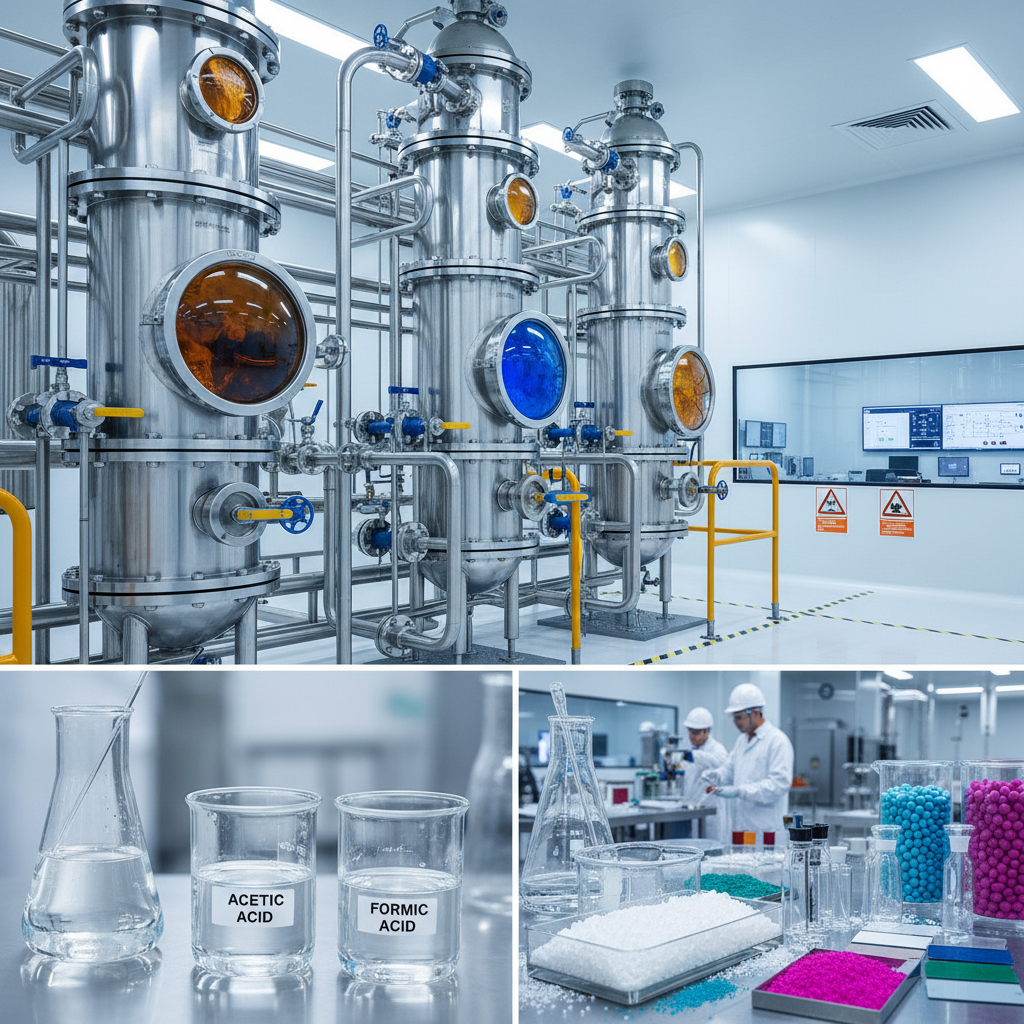
In the complex landscape of industrial chemistry, acid formic 85 stands as a pivotal compound that bridges the gap between basic chemical synthesis and high-performance industrial applications. This high-concentration organic acid is prized for its potent reactivity and versatility, serving as a critical building block in everything from leather tanning to advanced agricultural preservatives. Understanding its chemical properties is not just a matter of technical compliance, but a strategic advantage for manufacturers seeking to optimize their production efficiency.
Globally, the demand for acid formic 85 has seen a steady climb as industries shift toward more efficient, bio-compatible, and scalable chemical solutions. Whether it is used as a catalyst in the synthesis of rubber or as a crucial component in silage preservation to prevent spoilage, its role is indispensable. The global supply chain relies heavily on the purity and stability of this 85% concentration to ensure that end-products meet stringent international ISO and safety standards.
However, the utilization of such a powerful reagent comes with significant challenges, particularly regarding corrosive handling and environmental safety. The industry is currently facing a transition where the traditional use of acid formic 85 must be balanced with sustainable practices and "green chemistry" initiatives. By mastering the application and storage of this compound, enterprises can achieve a synergy between high industrial output and rigorous ecological responsibility.
Global Relevance and Industrial Impact of acid formic 85
The global industrial footprint of acid formic 85 is expansive, touching sectors from textiles in Southeast Asia to pharmaceutical hubs in Europe. As a primary intermediate, its prevalence is driven by its ability to act as both a reducing agent and a solvent. According to recent chemical trade data, the demand for concentrated formic acid is intrinsically linked to the growth of the global leather and textile industries, where it is essential for "pickling" and dyeing processes to ensure color fastness and material durability.
Beyond heavy industry, acid formic 85 plays a quiet but critical role in food security through its application in livestock feed preservation. By lowering the pH of silage, it inhibits the growth of undesirable molds and bacteria, thereby reducing waste and increasing the nutritional value of animal feed. This intersection of chemical manufacturing and agricultural sustainability highlights why this specific concentration is a benchmark for efficiency in global supply chains.
Chemical Definition and Molecular Significance of acid formic 85
At its core, acid formic 85 is a high-purity aqueous solution of methanoic acid, the simplest carboxylic acid. The "85" denotes its concentration by weight, meaning that 85% of the liquid is pure formic acid, while the remaining 15% is primarily water. This specific balance is engineered to provide maximum reactivity while remaining manageable for transport and mixing within industrial reactors.
The molecular significance of this compound lies in its structure, which allows it to function as a strong acid and a reducing agent. This dual nature makes it uniquely capable of facilitating complex chemical transformations that other acids cannot perform. In modern industry, this translates to a versatile tool for synthesizing esters, salts, and various rubber chemicals, making it a cornerstone of synthetic organic chemistry.
From a humanitarian and economic perspective, the accessibility of standardized acid formic 85 allows developing nations to scale their local tanning and textile industries without requiring overly complex laboratory setups. It provides a reliable, cost-effective chemical pathway to produce high-value exports, thereby fueling economic growth in regional industrial zones.
Core Technical Factors for acid formic 85 Performance
When evaluating the efficacy of acid formic 85, the first critical factor is Chemical Purity. Impurities in the solution can lead to unpredictable side reactions, especially in pharmaceutical synthesis or high-end rubber production. Maintaining a strict 85% concentration ensures that stoichiometric calculations in industrial recipes remain accurate, preventing material waste and ensuring consistent batch quality.
Another essential factor is Corrosive Stability. Because acid formic 85 is highly aggressive toward metals, the materials used for its storage and transport—such as high-density polyethylene (HDPE) or specially lined stainless steel—are vital. The interaction between the acid and the container can lead to contamination or structural failure, making material compatibility a non-negotiable technical requirement.
Finally, Thermal Reactivity plays a major role in how acid formic 85 behaves during large-scale exothermic reactions. Its ability to dissipate heat and maintain a stable pH profile under varying temperature conditions is what makes it a preferred choice for catalyst production. Engineers must carefully monitor these thermal properties to prevent "runaway" reactions in industrial mixers.
Global Applications and Diverse Use Cases of acid formic 85
The practical application of acid formic 85 spans across continents and diverse industries. In the leather industry of Italy and India, it is the gold standard for the deliming process, where it removes inorganic salts from hides to prepare them for tanning. Similarly, in the mining sectors of South America, it is used as a pH regulator in the leaching of certain ores, optimizing the recovery of precious metals.
In the realm of agriculture, acid formic 85 is deployed as a powerful antimicrobial agent. In remote industrial farming zones, it is injected into silage to stop the growth of Clostridium and other spoilage bacteria, ensuring that livestock feed remains nutritious through long winters. This application demonstrates the compound's value in bridging the gap between chemical engineering and food security.
Comparative Performance Metrics of acid formic 85 Applications
Long-Term Value and Strategic Advantages of acid formic 85
The long-term value of integrating acid formic 85 into a production line lies in its ability to lower overall operational costs. By providing a high concentration of active molecules per liter, companies can reduce the volume of chemical transport and storage required. This logistical efficiency translates directly into lower shipping costs and a smaller physical footprint for chemical warehouses.
Beyond the financial metrics, there is a logical and emotional value associated with the reliability of acid formic 85. In precision industries like pharmaceutical intermediates, the trust in a consistent 85% concentration allows chemists to innovate without fearing batch failure. This reliability fosters a culture of innovation and trust between raw material suppliers and end-manufacturers, ensuring a stable industrial ecosystem.
Future Trends and Green Innovations for acid formic 85
Looking toward the future, the evolution of acid formic 85 is closely tied to the "Green Chemistry" movement. Researchers are currently exploring bio-based methods of producing formic acid from biomass and CO2 capture. This shift would transform acid formic 85 from a petroleum-derived product into a carbon-neutral industrial reagent, significantly reducing the carbon footprint of the leather and textile sectors.
Digital transformation is also playing a role through the implementation of "Smart Dosing" systems. By using AI-driven sensors, factories can now inject acid formic 85 in precise micro-quantities based on real-time pH feedback. This automation eliminates human error, reduces chemical waste, and enhances the safety of the workplace by minimizing direct human exposure to the acid.
Furthermore, the rise of hydrogen energy sees acid formic 85 as a potential liquid organic hydrogen carrier (LOHC). Because formic acid can store hydrogen in a stable liquid form and release it upon request through catalysis, it could become a cornerstone of the future energy grid, transporting clean energy safely over long distances.
Overcoming Implementation Challenges for acid formic 85
Despite its benefits, the primary challenge of using acid formic 85 is its extreme corrosivity. Many older facilities struggle with equipment degradation, leading to costly downtime and safety risks. The expert solution involves a phased upgrade to fluoropolymer-lined piping and the implementation of rigorous preventive maintenance schedules, ensuring that leakages are detected before they become hazards.
Another common limitation is the volatility of the global price index for the raw materials used to synthesize formic acid. To overcome this, forward-thinking enterprises are engaging in long-term strategic partnerships with suppliers who can guarantee volume and price stability. By moving away from spot-market purchasing, companies can protect their margins and maintain a consistent production cadence.
Finally, environmental regulations regarding wastewater treatment in the tanning industry often target the residuals of acid formic 85. The innovative approach here is the adoption of closed-loop neutralization systems, where the acid is neutralized and the resulting salts are recovered for use in other industrial processes, turning a waste stream into a secondary revenue source.
Strategic Analysis of acid formic 85 Implementation Across Industries
| Industry Sector |
Primary Function |
Technical Risk Level |
Efficiency Gain (1-10) |
| Leather Tanning |
Pickling & Deliming |
Medium |
9 |
| Agriculture |
Silage Preservation |
Low |
8 |
| Rubber Industry |
Coagulant/Catalyst |
High |
7 |
| Textile Industry |
Dyeing Assistant |
Medium |
8 |
| Mining |
pH Regulation |
High |
6 |
| Pharmaceuticals |
Intermediate Synthesis |
Very High |
10 |
FAQS
The 85% concentration provides a higher density of active molecules, which reduces the total volume of liquid needed for a reaction. This leads to lower shipping costs, reduced storage space requirements, and faster reaction times in industrial processes, making it more cost-effective and efficient for large-scale operations.
It must be stored in containers made from corrosion-resistant materials. High-density polyethylene (HDPE) or specially treated stainless steel (grade 316 or higher) are recommended. Containers should be kept in a cool, well-ventilated area away from incompatible substances like strong bases or oxidizing agents to ensure stability.
Yes, when used according to regulated dosages, it is a highly effective preservative for silage. It works by rapidly lowering the pH, which prevents the growth of pathogenic bacteria and molds. However, it must be handled by professionals during the application process to avoid direct contact with animals or handlers.
In some specific applications, such as certain tanning or dyeing processes, it can be a viable substitute because it is often less aggressive toward the organic fibers than sulfuric acid. However, because their chemical properties differ, a full trial and stoichiometric adjustment are required before switching.
A significant leak can cause localized soil acidification and harm aquatic life if it enters waterways. However, because it is biodegradable, the long-term environmental impact is lower than that of synthetic fluorinated acids, provided that prompt neutralization with lime or soda ash is performed.
The most common method is acid-base titration using a standardized sodium hydroxide (NaOH) solution. Additionally, refractive index testing and density measurements can quickly confirm if the concentration is indeed 85% before the product is introduced into the production line.
Conclusion
In summary, acid formic 85 is far more than just a chemical reagent; it is a strategic industrial asset. From its essential role in leather tanning and agriculture to its emerging potential as a hydrogen carrier and carbon-neutral intermediate, its versatility is unmatched. By balancing its high reactivity with rigorous safety protocols and modern materials science, manufacturers can unlock significant gains in efficiency, cost-reduction, and product quality.
As we move toward a more sustainable industrial future, the focus will shift toward bio-derived acid formic 85 and AI-driven application methods. Companies that adopt these innovations early will not only comply with tightening environmental regulations but will also lead the market in operational excellence. To ensure your supply chain is powered by the highest quality chemical components, we invite you to partner with experts in the field. Visit our website: www.tengerchemical.com